
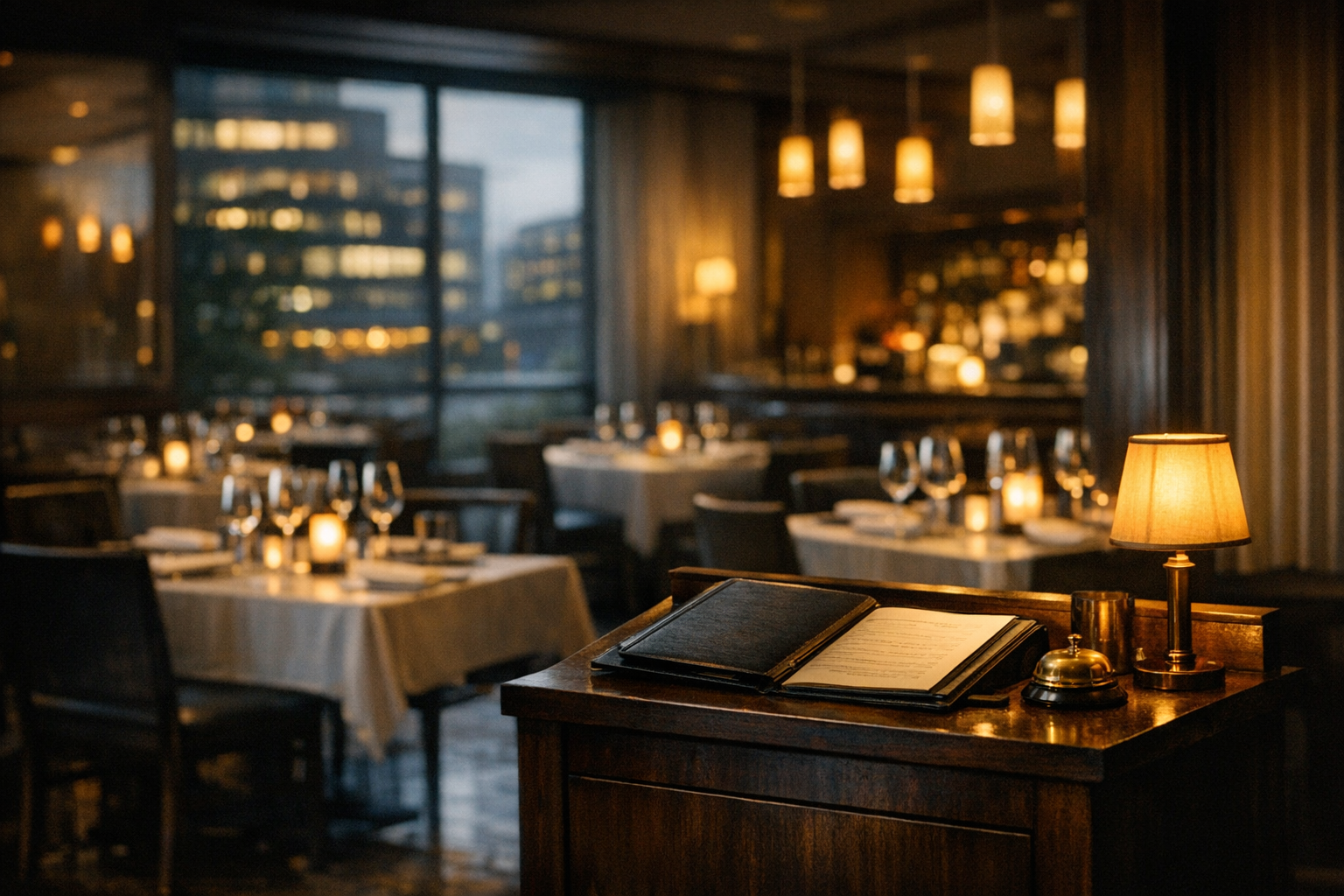
A lot of restaurant owners think they have a food problem when they really have a conversion problem.
The menu is strong. The dining room looks right. Guests who come in usually come back. Yet reservations stay inconsistent, private dining inquiries are thin, and slower nights never seem to fill. Meanwhile, a competitor with a less interesting menu somehow looks packed online.
That gap usually has nothing to do with who makes the better risotto. It has everything to do with who makes booking easier, faster, and more trustworthy the moment a customer starts searching.
In Fairfield County, that problem gets exposed quickly. Diners have options in every direction, from neighborhood staples in Westport and Fairfield to polished concepts in Greenwich, Norwalk, Stamford, and Darien. When someone searches for a place for dinner, brunch, birthday drinks, or an anniversary reservation, they are not conducting a deep investigation. They are making a fast decision based on what they see first and what feels easiest to act on.
That means your restaurant is being judged before anyone tastes the food. It is being judged by search visibility, photos, mobile experience, review signals, booking friction, and whether your digital presence feels current or neglected.
Most restaurants lose bookings online in ways that are completely avoidable. Worse, they often misdiagnose the issue. They blame seasonality, staffing, inflation, weather, or "people just eating out less." Those factors matter, but they do not explain why one local restaurant captures demand while another leaks it.
If your restaurant in Fairfield County is losing bookings to competitors online, the reasons are usually more specific and more fixable than owners want to admit.
Your restaurant is invisible or unconvincing at the exact moment diners decide
The booking battle is won before someone ever lands on your menu page. Most restaurants assume that being vaguely present online is enough. It is not. If you are hard to find, hard to trust, or hard to book, people move on.
Your Google presence is weaker than you think
When diners search for a restaurant, they are often comparing three to five options in under two minutes. They are looking at Google Business Profiles, maps results, review counts, photos, operating hours, reservation links, and quick signals that reduce uncertainty.
If your profile has outdated hours, weak photos, sparse reviews, or missing reservation functionality, you are creating doubt. Doubt kills bookings. Not because people consciously decide your restaurant is bad, but because another option feels easier and more reliable.
This is where many Fairfield County restaurants quietly lose revenue. They rely on reputation in the dining room but neglect reputation in search. A great local following does not automatically translate into strong digital visibility. If your competitor appears cleaner, more active, and more current on Google, that competitor often wins the click.
A common example: a potential customer searches for "best brunch Fairfield CT" or "romantic dinner Greenwich CT." They see a competitor with polished interior photos, recent reviews, clear booking access, and updated seasonal posts. Your listing, by comparison, has dark phone photos from three years ago, no strong description, and inconsistent information between platforms. The customer never reaches your website. You lost the booking before your restaurant was even properly considered.
What actually works is treating your search presence like a revenue channel, not a side detail. That means actively improving your visibility, tightening your local positioning, strengthening review volume and quality, and making sure every search touchpoint answers the diner's unspoken question: should I trust this place tonight?
If search visibility is part of the issue, a focused local SEO strategy can make a measurable difference, especially in a market as competitive as Fairfield County. This is exactly where a service like SEO support for local businesses becomes a practical next step, not a marketing luxury.
Your brand looks forgettable online even if the in-person experience is strong
Restaurant owners often underestimate how much digital presentation affects perceived quality. Diners do not separate brand from experience. If your website, photos, menu formatting, and reservation flow feel dated, they assume the restaurant may be dated too.
That does not mean every restaurant needs to look trendy or expensive. It means the online presentation has to match the quality of the actual place. A polished steakhouse should feel polished online. A coastal seafood spot should feel fresh and intentional. A family-owned Italian restaurant should feel warm, established, and credible, not digitally abandoned.
Too many restaurants use websites that look like they were built years ago and then patched together with PDF menus, broken image galleries, tiny mobile text, and reservation buttons that are hard to find. On desktop, it looks tolerable. On a phone, where most booking decisions happen, it falls apart.
That matters because diners are not browsing for entertainment. They are trying to solve a problem fast. Where should we go tonight? Can we book for six? Is there outdoor seating? Is this good for a business dinner? If the site makes those answers difficult to find, the customer leaves.
The strongest restaurant websites do not overwhelm visitors. They remove hesitation. They show the space clearly, communicate the atmosphere quickly, make menus easy to read, and present reservation actions without forcing users to hunt. They also reflect a restaurant that is alive right now, not one that peaked five years ago.
If your current site is costing you bookings because it feels stale or clunky, a thoughtful website redesign and revamp is often less about aesthetics and more about revenue recovery. A better site does not just look nicer. It converts undecided diners into actual reservations.
Most restaurants create friction where customers expect speed
Once a diner is interested, the next risk is operational friction. This is where restaurants lose high-intent customers in the final stretch. The person wants to book. The problem is that your digital setup makes the booking feel annoying, uncertain, or incomplete.
Your reservation path is slower and messier than your competitors'
Consumers have been trained by better digital experiences in every industry. They expect speed, clarity, and confirmation. Restaurants that still force people through clumsy forms, hidden links, outdated booking widgets, or phone-call-only reservation requests are making a costly mistake.
This is particularly damaging in Fairfield County, where a large share of diners are busy professionals, families coordinating schedules, and groups making plans on the fly. They are often booking from a phone between meetings, in a carpool line, or while texting friends. If your reservation process introduces friction, they simply choose the place that does not.
Some of the most common losses happen in small moments:
A reservation link opens slowly or breaks on mobile.
The website sends users to a third-party system that looks sketchy or inconsistent.
There is no obvious path for private dining, large parties, or event inquiries.
The restaurant requires a phone call for basic booking situations outside business hours.
The confirmation process is unclear, leaving people unsure whether the request was received.
Each of those problems sounds minor in isolation. Together, they quietly reduce covers every week.
What most operators miss is that convenience itself is part of the brand. A seamless reservation experience signals professionalism. A clunky one signals disorganization. Diners may never say that out loud, but they act on it.
Restaurants that outperform online tend to make key actions immediate and obvious. Reserve a table. View the menu. Call now. Ask about private events. Get directions. Everything else is secondary. They also think beyond standard reservations. If private dining, rehearsal dinners, corporate gatherings, and holiday parties matter to revenue, those inquiry paths need to be just as smooth and visible as normal table bookings.
This is not about adding more technology for the sake of it. It is about reducing the number of moments where a ready-to-book customer can disappear.
You are not answering the real concerns that stop people from booking
A surprising number of restaurant websites and profiles fail to answer the exact questions that matter most before a reservation is made. Owners focus on what they want to say. Diners focus on what they need to know.
Those are not always the same thing.
A customer planning an anniversary dinner wants to know whether the atmosphere feels worth the occasion. A parent booking brunch wants to know whether the place feels manageable with kids. A professional choosing a restaurant for a client dinner wants reassurance that the experience will feel polished and dependable. A group planner wants to know whether parking will be a headache, whether reservations are honored on time, and whether the space works for six to eight people without chaos.
Most restaurant sites do a poor job addressing these real conversion questions. They post generic copy about "fresh ingredients" and "exceptional hospitality" while ignoring the practical trust signals that drive bookings.
That is why competitors with average food can still win online. They answer concerns faster. Their photos are clearer. Their reservation options are more obvious. Their reviews mention exactly the occasions future customers care about. Their digital presence reduces social risk.
If your restaurant wants more bookings, the goal is not just traffic. The goal is confidence.
That means your digital presence should help people quickly confirm:
This place fits the occasion.
This place is active and reliable.
This place is easy to book.
This place feels worth the money.
This place will not create unnecessary hassle.
When those signals are missing, diners default to the safer-looking alternative.
This is where business owners need to think more clearly about the difference between awareness and conversion. Plenty of restaurants are known locally. Fewer are positioned to win in the exact window where intent turns into action. That window is short, and in a competitive county, hesitation is expensive.
The restaurants that consistently capture bookings online are usually not doing one magical thing. They are doing the obvious things far better than everyone else. They show up strongly in search. They look current. They make decisions easy. They remove friction. They answer unspoken concerns. They understand that online trust now shapes offline revenue.
And the restaurants that keep losing bookings tend to repeat the same mistakes. They assume reputation will carry them. They tolerate a dated website because "it still works." They ignore weak search visibility because word of mouth feels strong enough. They accept messy reservation flows because the staff can handle calls. Then they wonder why covers stay inconsistent while competitors keep filling tables.
In this market, good food is not enough to protect weak digital execution. Fairfield County diners have options, and online they make fast judgments. If your restaurant is losing bookings, the issue is rarely mysterious. It is usually visible in the customer journey, from search result to reservation confirmation.
That is good news, because visible problems can be fixed. But only if you stop treating your digital presence like an accessory and start treating it like what it is: part of the front of house.