
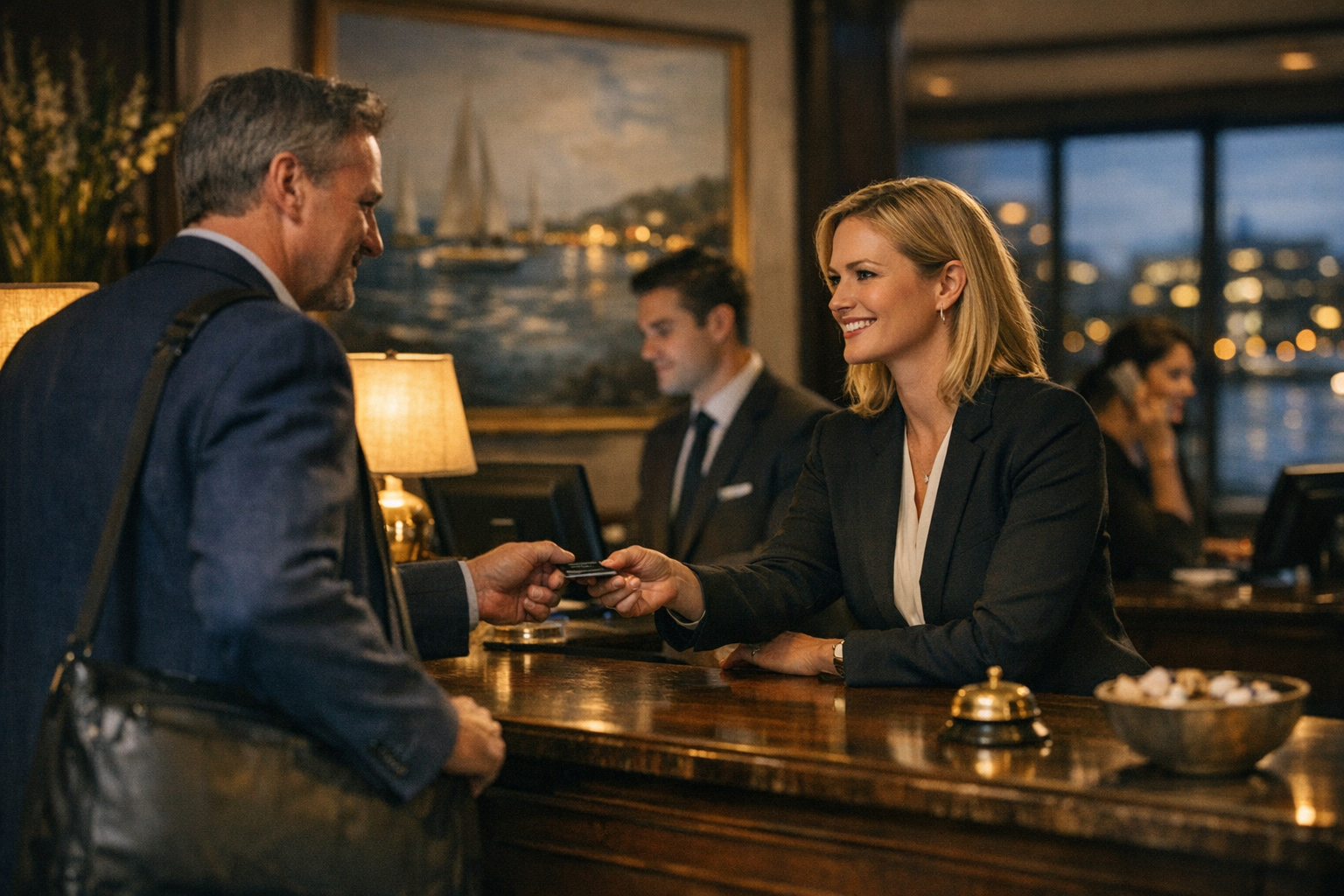
Greenwich hospitality businesses do not have a traffic problem. They have a conversion problem.
A hotel can have strong brand recognition, a restaurant can be fully booked on weekends, an event venue can get steady inquiries, and a private club can enjoy a loyal local reputation. Yet revenue still leaks out of the business every day because the booking experience is patched together with forms, phone calls, third-party platforms, manual confirmations, and staff workarounds that should have been replaced years ago.
That leak is expensive in Greenwich. Labor costs are high. Guest expectations are higher. Competition is polished. And when a potential guest or customer is ready to book, they are not interested in navigating friction. They want availability, clarity, trust, and confirmation without delay.
This is where many hospitality operators make the wrong call. They assume booking is an admin function. It is not. Booking is a sales system. It shapes occupancy, average order value, staff efficiency, guest experience, and repeat business. If the system is clunky, slow, or disconnected from the way the business actually runs, it quietly drags down growth.
A custom booking system changes that because it is built around how your operation works, how your customers make decisions, and where your margin is won or lost. That matters whether you run a boutique hotel in Greenwich, a waterfront dining concept, a spa, a catering business, a wedding venue, or a multi-service hospitality group managing reservations across locations.
The businesses that get this right stop treating technology as a bolt-on tool. They use it to tighten the entire customer journey, reduce internal friction, and create a better buying experience at the exact moment revenue is on the table. If your current setup relies on too many manual steps or forces customers into channels that are convenient for software vendors rather than for your business, it may be time to look at a more tailored approach through custom software development.
A custom booking system increases revenue where most hospitality businesses underperform
The obvious value of a booking system is that it accepts reservations. That is the least interesting part of the conversation. The real value is in how it influences buying behavior, reduces abandonment, and gives the business more control over inventory and pricing.
Most hospitality businesses in Greenwich are operating with some mix of off-the-shelf reservation software, marketplace dependency, staff-managed exceptions, and disconnected follow-up. That setup creates small failures at every stage. A guest starts a booking but cannot find the right room package. A diner wants to reserve for a larger group but hits a rigid cap and gives up. A venue lead submits an inquiry and waits too long for a response. A returning customer has to re-enter information that should already be stored. None of these failures look dramatic on their own. Together, they cost serious money.
Direct bookings become easier and more profitable
Third-party booking channels can fill gaps, but they also train hospitality businesses to give away margin in exchange for convenience. That tradeoff gets dangerous when the business becomes dependent on outside platforms for occupancy, reservations, or event volume. You lose control over presentation, customer data, upsells, and often the relationship itself.
A custom booking system gives that control back. It can be built around your room types, service categories, booking rules, cancellation policies, add-ons, seasonal offers, and customer segments rather than forcing your business into a generic template. That sounds technical, but the business result is simple: more people complete bookings directly because the process feels clear and frictionless.
For a Greenwich boutique hotel, that might mean creating a smoother path for weekend packages, extended stays, and premium add-ons without sending guests through an inflexible third-party flow. For a restaurant, it could mean handling private dining inquiries, tasting menu deposits, and event reservations in one structured process instead of splitting them across emails and phone calls. For a spa or wellness property, it may mean allowing customers to book multi-service visits with real-time staff and room availability rather than forcing front-desk staff to manually coordinate the schedule.
This is where revenue improves fast. Direct bookings typically carry better margins. They also create stronger opportunities for pre-arrival upsells, repeat offers, loyalty incentives, and post-visit remarketing. When your own system owns the relationship, you are not just accepting a reservation. You are building a customer asset.
And there is another point many operators miss: premium customers expect premium booking experiences. In Greenwich, affluent buyers do not interpret friction as charming or personal. They interpret it as inefficient. If your business sells a high-end hospitality experience but the booking process feels dated, confidence drops before the guest even arrives.
Better booking logic raises average transaction value
A generic platform is built to process transactions. A smart custom system is built to shape them.
That distinction matters because not every booking should be treated the same. A Friday evening dinner reservation for two is not the same as a 14-person birthday request. A one-night stay is not the same as a holiday package. A wedding inquiry is not the same as a corporate event lead. If the system treats all demand as flat, you miss opportunities to qualify, upsell, prioritize, and route bookings in ways that improve profitability.
Custom booking logic can nudge customers toward more profitable choices without making the experience feel pushy. It can surface higher-margin packages, require deposits for high-risk reservations, present strategic add-ons at the right moment, or steer users toward available time slots that support smoother operations. It can account for blackout dates, minimums, room turnover windows, staffing thresholds, equipment constraints, and VIP handling.
That is where real operational intelligence starts to show up in revenue.
Consider an event venue in Greenwich handling tours, wedding inquiries, and private corporate bookings. With a basic form, every lead lands in the same inbox, staff sorts through them manually, and response speed depends on who is available that day. With a custom booking system, leads can be segmented instantly, calendar availability can be reflected in real time, required event details can be captured upfront, and follow-up workflows can be triggered automatically based on event size, budget, or target date. Better-fit leads move faster. Low-quality inquiries take less staff time. High-value opportunities get the attention they deserve.
The same principle applies across hospitality categories. Systems that reflect real business priorities outperform systems that simply collect requests. If your business is trying to scale without increasing chaos, that usually points to one conclusion: generic software has already done all it can do.
A custom booking system reduces operational drag that hurts guest experience and growth
Hospitality owners often talk about bookings as if they live in the front end of the business. In reality, booking decisions shape operations all the way through fulfillment. The moment a reservation is made, it affects staffing, scheduling, inventory, communication, service prep, forecasting, and customer expectations.
When those pieces are disconnected, employees compensate manually. That may keep the business running, but it creates a fragile operation. Staff members become human integrations between tools that do not talk to each other. Errors increase. Service gets inconsistent. Managers spend time fixing issues they should have seen coming. And growth becomes harder because every increase in volume adds more complexity rather than more efficiency.
Staff waste less time and make fewer expensive mistakes
The hidden cost of a weak booking setup is not just missed revenue. It is the labor spent patching the system every day.
A host stand juggling online reservations, phone calls, walk-ins, and special requests can quickly become a bottleneck if the system lacks flexibility. A hotel front desk that has to manually reconcile room availability across channels is operating with unnecessary risk. A venue coordinator who tracks inquiries in spreadsheets while chasing signatures and deposits by email is doing work the software should handle automatically.
These are not harmless inconveniences. They create overbooking, underutilized inventory, missed follow-ups, payment confusion, and guest frustration. They also make it harder to train new team members because so much operational knowledge lives in habits and memory instead of in the system itself.
A custom booking system can centralize availability, customer details, payment status, service rules, special requests, communications, and workflow triggers in one environment. That means fewer handoffs, less duplicate data entry, and faster decision-making by staff. It also means your team can spend more time on service and selling instead of administration.
For hospitality businesses in a market like Greenwich, this matters because labor is too expensive to waste on preventable manual work. Owners often assume the answer is hiring better people or adding more management oversight. Usually the real issue is that the system architecture is making competent employees work harder than necessary.
A well-built custom platform can also connect with the rest of the business. Payment processing, CRM data, follow-up messaging, customer profiles, internal notes, reporting dashboards, housekeeping or service schedules, and sales pipelines can all be structured around the booking event. That creates cleaner operations and better visibility into what is actually happening.
If your current workflow depends on staff remembering exceptions, checking multiple tools, or cleaning up bad data after the fact, the problem is not your team. The problem is the system. Building a solution around your operation through custom software development is often the difference between a business that feels busy and a business that is actually efficient.
Guest experience improves before, during, and after the booking
Hospitality businesses love to talk about experience, but many still treat the digital booking journey as separate from the real guest experience. That is a mistake.
The guest experience starts long before check-in, seating, or arrival. It starts when someone decides whether booking with you feels easy, trustworthy, and worth the price. Every moment of confusion lowers confidence. Every unnecessary delay creates doubt. Every manual back-and-forth makes the business feel less polished.
A custom booking system lets you design that experience with intention. The interface can reflect your brand. The flow can match how customers actually choose services. Confirmation messaging can answer the questions guests typically ask next. Pre-arrival communication can be timed around the booking type. Returning customers can move faster because their preferences and history are recognized. Staff can see context before the guest even arrives.
That context is where hospitality gets stronger. If a restaurant knows a reservation is tied to an anniversary request and a fixed-menu upgrade, service feels more coordinated. If a hotel sees that a guest consistently books early check-in and spa access, the property can prepare accordingly. If a venue team knows whether a lead is local, corporate, repeat, or referral-based, outreach becomes sharper and more relevant.
This does more than create convenience. It supports retention. It supports reviews. It supports referrals. It gives the business more opportunities to turn one transaction into a longer relationship.
And that is the broader point. A custom booking system is not just about software preference. It is about business model strength. In Greenwich, where hospitality buyers have options and expectations are high, the businesses that win are usually the ones that remove friction without removing quality. They make it easier to say yes, easier to spend more, and easier to come back.
That advantage compounds. Better booking data improves forecasting. Better forecasting improves staffing and planning. Better planning improves service. Better service improves reputation. Better reputation makes acquisition more efficient. The system becomes part of growth, not just part of operations.
Most hospitality businesses wait too long to address this because the current process is still functioning well enough to survive. But surviving with a patched-together booking experience is not the same as building a business that is easier to run and more profitable to scale. The right custom system does both.